
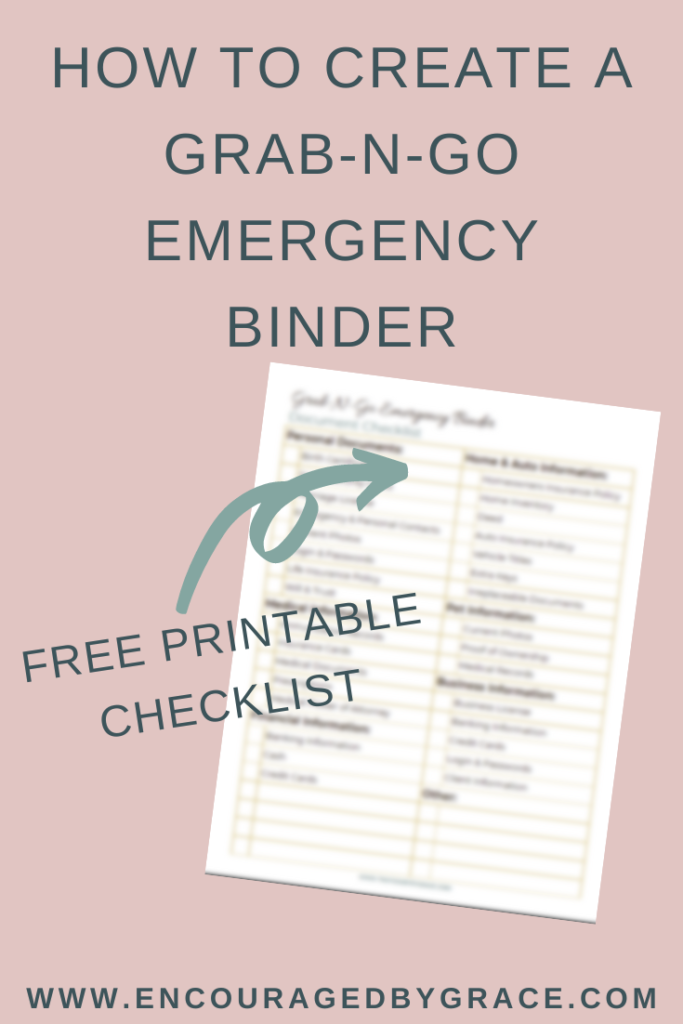
How to Create a Grab-N-Go Emergency Binder
This post may contain affiliate links which means I may receive a commission for purchases made through links. I will only recommend products that I have personally used! Learn more on my Privacy Policy page.
I’ve pinned many things to Pinterest when it comes to home organization, office organization, paper clutter organization, etc. They all had things that would work for me and things that wouldn’t. So, I set out to put my own spin on organization for my household. My first organization project is a Grab-N-Go Emergency Binder.
We actually live in an area that doesn’t really have a lot of natural disasters. Our biggest would be flooding. We actually live on top of a big hill so we are pretty safe from that as well. The next could possibly be blizzards, but we really haven’t had those in recent years. So why would I need a grab-n-go emergency binder? Well, what if our house caught on fire or was broken into? What if we had a medical emergency or family crisis? What if we were going to be traveling or away from home for a while? These are all things I took into consideration when I was putting together my grab-n-go emergency binder.
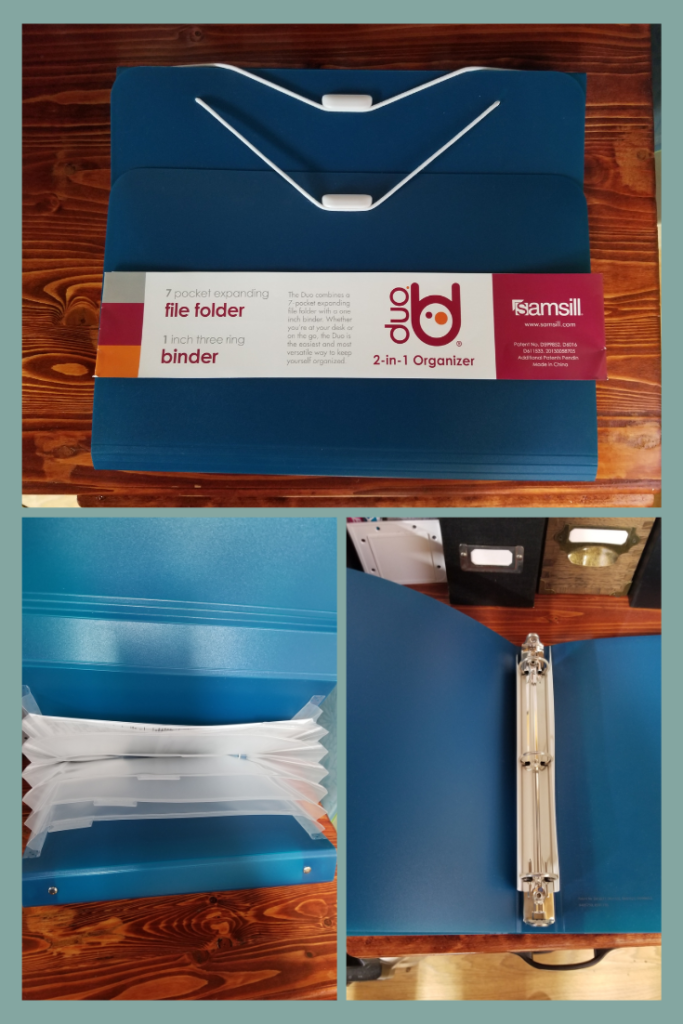
For me the binder needed to be portable, so it had to be lightweight and not huge. It also needed to be stored in a location that was safe, but easy to access. These are things you should consider as well, even if you are in an area where natural disasters happen a lot, you’ll what to be able to grab it and go! This was one of the hurdles that kept me from making one sooner. I’m binder/notebook/planner obsessed! So finding that right fit for my needs was holding me up. Then I found it, the holy grail of binders! I saw it on Pinterest and was off to find it. It was tough because the pin I saw it on was just a picture and didn’t lead to a website or give me a clue to the name of this amazing binder. I finally found it on Amazon. It’s called duo 2-in-1 Organizer!!! It is a 3 ring binder and a file folder in one! So, I bought it, but guess what!?! I stopped again because what was I supposed to put in there? How was I supposed to organize it? After gathering info from what others put in theirs, here is a breakdown of what I put in mine and why:
Section 1 - Personal Documents:
Copy of Birth Certificates – I keep the originals in a fireproof safe. You can keep the originals in your binder or wherever you feel they would be safest. For our family having copies in the binder is the better way to go.
Copy of Social Security Cards – I keep my card on me, but I keep the kid’s cards in the fireproof safe. I laid everyone’s card on the scanner and printed one page with just our cards. Saves time and paper!
Copy of Marriage License – I keep the original in the fireproof safe.
Emergency Contacts & Personal Contacts – I created a contact list with our emergency contacts at that top and other personal contacts at the bottom. Our contacts include family & friends, doctors, schools, utility companies, etc. I know, we all have cell phones, but what happens when they get destroyed, lost, or the battery died!?! I will be the first to admit that I don’t know all the numbers I should by heart. I do have to look up/depend on them to be in my phone. So, this was a key piece of information I wanted to include. Also, it could be helpful for my kids, who do not have phones with all these numbers.
Current Photos – I keep a copy of the kid’s most recent photos in the binder and one copy in our fireproof safe. I definitely should add a photo of Mark and myself in case something ever happens to us. Having a current photo on hand and easily accessible can be very helpful in a few situations.
Login & Password Info – I do not know about you, but I have login information everywhere. I have the information on a spread sheet on 2 computers, in the back of both my planners and written in a notebook. I don’t keep them all up to date, so I definitely need a new system. I created a login & password keeper document to keep in my binder. I honestly only put essential information on it though, like banks, utilities and bills. I may choose to add all the other later. You can choose to put whatever login & password info you want in your binder.
Life Insurance Policy – A copy of your policy and phone number.
Will & Trust – You just never know what may happen and you may need a copy.

Section 2 - Medical Information:
This section will vary based on family and medical issues.
Immunization Records – I keep a copy of all our immunization records in our binder and the originals in our fireproof safe.
Insurance Cards – I carry our insurance cards with me, but I wanted to have a backup in place. I placed our insurance cards on the scanner and copied the front on one side of a piece of paper and the back on the other. I also made a copy for our fireproof safe. I know it sounds like a lot of redundant information but was is to go with you in an emergency!
Medical Documents – If anyone in your family has any kind of medical condition you should keep any information you need here.
Prescriptions – List of prescriptions for each person. You should have any needed prescriptions ready to go with you in case of an emergency.
Medical Power of Attorney – You may need this if something happens to one of your family members.
Section 3 - Financial Information:
Banking Information – I made a list of our checking and savings account numbers. I also included phone numbers to the banking institution. If possible, you may want to add a book of checks or a few blank ones. You may not have access to an ATM to get cash, which leads me to my next item.
Cash – I have $100 cash in my binder. I have it in a sealed envelope. Power may be out, cards may not be working, you never know when you may need cash in an emergency. You can put however much cash you feel would be a good option for you and your family.
Credit Cards – Make a copy of the front and back of your credit cards. If they become lost or stolen, then you have the information you need to report it.
Section 4 - Home & Auto Information:
Homeowners Insurance Policy – I would have the policy numbers and contact information for your agent. If you want, you can keep a copy of your policy in here also.
Home Inventory – This is something that I have slacked on over the years. I never completely understood why you would need to do a home inventory, plus it seemed very time consuming. Home inventory is a list of all your items in your house. For me I listed electronics, jewelry, any family heirlooms, etc. You want to include as much information about each item as possible like brand, model, serial numbers, description, when and where you bought it, warranty info, etc. Include a picture of each item would be ideal, but I have also saw where people have walked around their house and videoed everything. If something happens to your house like a fire, flood, burglary, etc., then you have documentation of your possessions.
Deed – I chose to not include this in my home binder. I have it in our fireproof safe. I may copy it one day and add it.
Auto Insurance Policy – Policy numbers and contact information for your agents. Include all vehicles and don’t forget any recreational vehicles like boats, rvs, etc. You can also keep a copy of your policy here and extra insurance cards.
Vehicle Titles – Having a copy of your titles in your binder allows you quick access to VIN numbers and other information that police, or other emergency agencies may need.
Extra Keys – Keeping an extra key to your vehicles, house, other buildings, post office box, safety deposit box, etc. could come in handy if you lose one in the hustle and bustle of evacuating.
Irreplaceable Documents – I have a small Flash Drive that I put a backup of my computer files, photos and videos. Depending on the size of the files you may need a few. You can keep this in your binder, a fire proof safe or some other safe place, but it is always a good idea to back up your files often.
Section 5 - Pet Information:
(This section is only relevant if you have pets.)
Current Photos – It is a good idea to have a current photo of your pet(s). In an emergency you never know what could happen and your pet could run off, having photos to show shelters or make posters to hang will be helpful.
Proof of Ownership – If your pet has any kind of papers it is a good idea to keep a copy of them in your binder.
Medical Records – If your pet has any medical problems it might be handy to have that information, but you should especially have a copy of their shot records.
Section 6 - Business Information:
(This section is only relevant to you if you have a business.)
Copy of Business License – Any state, county, or local license I would keep a copy of them in your binder.
Banking Information – Make a list of your checking and savings account numbers. Be sure to include phone numbers to the banking institution. If possible, you may want to add a book of checks or a few blank ones. You may not have access to an ATM to get cash.
Credit Cards – Make a copy of the front and back of your credit cards. If they become lost or stolen, then you have the information you need to report it.
Login & Password Info – Keep essential business login information handy, especially for banking, email, websites, and other important sites/apps related to your business.
Client Information – You may need to contact clients, so have a way to get access to that information.
When researching emergency binders there was lots of different ideas on what to include and not include. Some people suggested including retirement information, emergency plan, copies of driver license, passports, death certificates, tax documents, diplomas, transcripts, etc. The bottom line is that everyone’s needs will be different. How do you decide what to include in your emergency binder?
First, you need to ask yourself these questions:
How will you be using your binder?
Are you in an area that evacuates a few times a year for natural disasters?
Do you live in an area that is at risk for natural disasters that may destroy your property?
If a natural disaster/emergency happens will it be days or weeks before I can get back to my house?
You will want it to be portable and easily accessible in the event of an emergency. You will want key information about your house, possessions, family, etc. If you cannot make it back home for weeks, what information would you need to have on hand?
Putting it all together:
As I mentioned above, I bought that duo binder to use for my emergency binder. You can use items you may already have on hand. Here’s a list of items you can use:
3-ring binder
Clear Sheet Protectors
Envelops
Zipper pouch
Tab Dividers

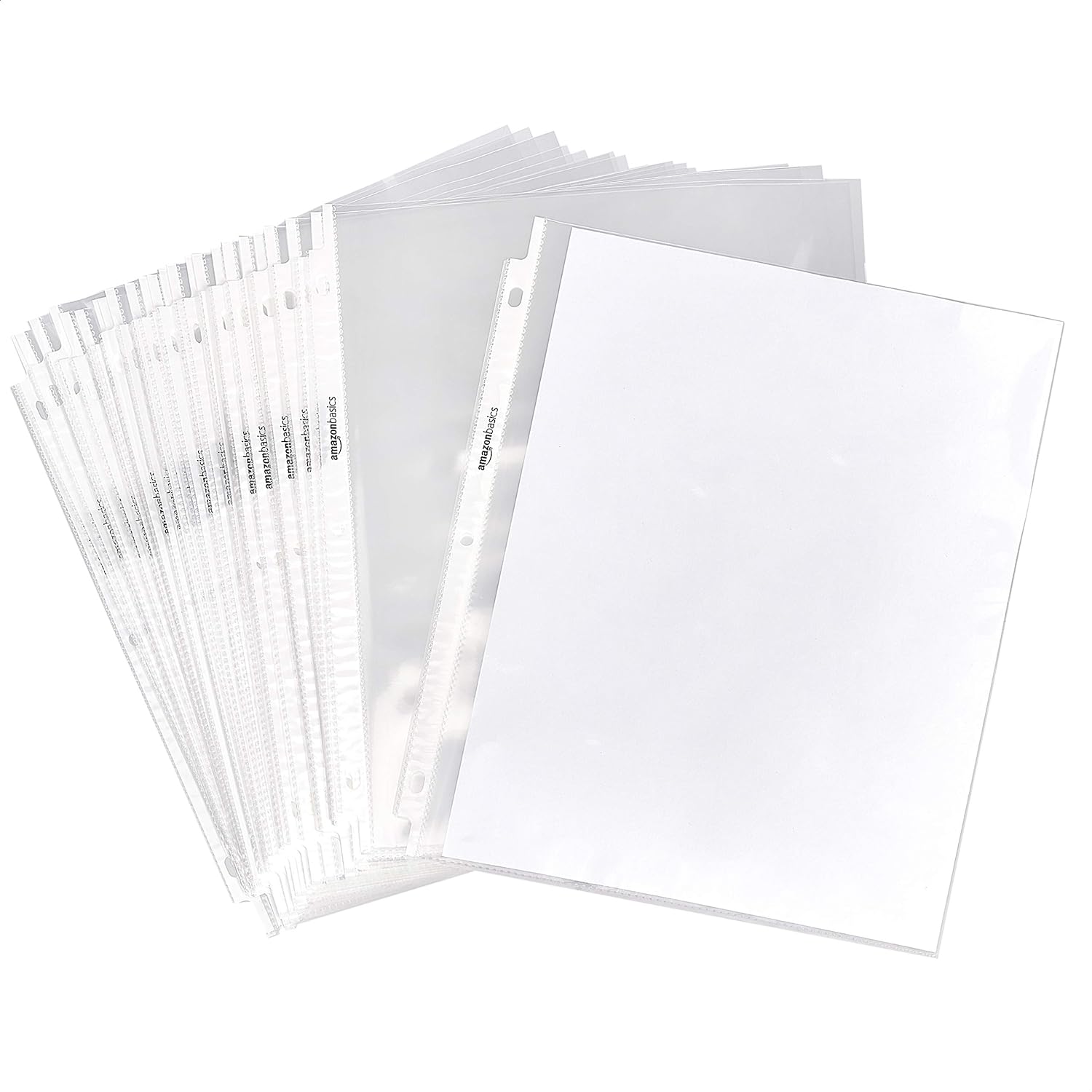


You can put your binder together in any way that works for you and your family. I placed all the documents in the sheet protectors. You can use the tab dividers to keep each section separate, but that is not necessary. I would put your cash in an envelop and place it either in a sheet protector or a zipper pouch. I would also place the flash drive, extra keys and other things like this in the zipper pouch. There will be less chance to lose these items.
Do not over think it, but make sure you get the important information in there. It is really up to you if you want to keep your original documents in the binder or just copies. There is a lot of important and personal information in your emergency binder, you need to keep this in mind when finding the right location to keep it. You want to be able to grab it quickly if you have to leave your house in a hurry, but you also want it to be secure so random people can’t get easy access to your information.
Stay positive, stay motivated, and make today amazing!
With love and encouragement,

**P.S.
Don’t forget to sign up to get your FREE printable!


You May Also Like

Part 2: Spring Cleaning Systems – Deep Clean, Organize, and Keep Your Home Clutter-Free
March 12, 2025
Simple & Effective Ways to Meal Plan on a Budget
April 16, 2025